
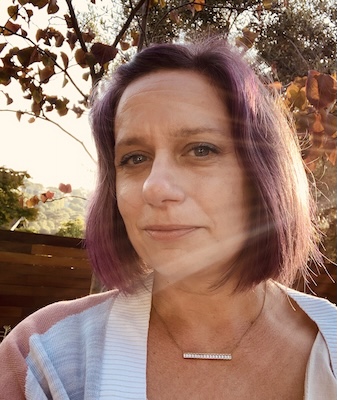
D.E. Hardy
Contest - Flash Fiction
D.E. Hardy’s work has appeared in Pithead Chapel, X-R-A-Y Magazine, Lost Balloon, and Flashback Fiction, among others. Her work has been nominated twice for a Pushcart Prize and anthologized in Best Small Fictions and Best Microfictions. She lives in the San Francisco Bay Area.
Back Together Again
Josh declared them kings, skipping school like they did, often, but not so much as to fail or get kicked out, sitting there on a stone retaining wall that overlooked the valley, their tiny town, the four of them holding court, the horizon good and long, farther than the river even.
Carter said they had vision, were destined to be better men than their dumbass dads who pushed brooms and thought the height of life was cold beer and direct tv.
Brian yapped about herds of wild horses: did they really exist like in that nature show, hundreds running the plains, going wherever they wished, and would he ever leave Ohio, not like his brother who moved to Kentucky for a year and then moved back, but leave leave, like for good.
Dave looked down the line, the four of them, screwy but decent, good eggs, his grandma said, and then down at their humpty dumpty town. A tingle washed over him, a sense Dave couldn’t quite pin, like the town was pulling him. Suddenly, something felt fragile inside, breakable, and he wondered if this was how it was always going to be, the four of them meeting up here as grownups, calling in sick, prattling and reminiscing. Dave was filled with it, this fear, that these times—right now—were as good as life was ever gonna get, and his insides chewed this, but he wasn’t sure if he said anything out loud.
“ English nursery rhymes hold a bittersweetness that maps so well onto coming-of-age angst. Growing up, I remember fearing the world would never be bigger than my current circumstance. It takes such trust to dream, to believe that the world holds something more for you—and so often it doesn't. The world is amazing; the world is cruel. Both are true. So much of childhood (and adulthood!) is grappling with this cognitive dissonance. ”