
10.27.2026
10.25.2026
Chido Muchemwa
by
Comments:
10.23.2026
Beth Kephart
by
Comments:
10.23.2026
Kate Myers Hanson
by
Comments:
10.20.2026
Dewey Fox
by
Comments:
10.20.2026
Jona Colson
by
Comments:
10.20.2026
Stephanie Staab
by
Comments:
10.20.2026
Marzelle Robertson
by
Comments:
10.20.2026
Seth Peterson
by
Comments:
10.20.2026
Jennifer Keith
by
Comments:
10.19.2026
Franziska Hofhansel
by
Comments:
10.19.2026
Sid Gold
by
Comments:
10.19.2026
Jay Aelick
by
Comments:
10.19.2026
Davin Faris
by
Comments:
10.19.2026
Linda Dove
by
Comments:
10.19.2026
Ned Balbo
by
Comments:
10.1.2026
Winter 2026 Contest Categories Now Open
by Barbara Westwood Diehl
No changes for our winter 2026 contest categories, but here are reminders about the guidelines and judging criteria, in case they’re helpful.
Our general guidelines are provided in each Submittable category, but some additional thoughts on the short forms are included here. Keeping in mind that there are very few “rules” for writers with boundless imaginations and creativity.
Total word limit for each contest category (prose poem, flash fiction, flash creative nonfiction) is 1,000. One, two, or three flash fiction works in one Word doc, but no more than 1,000 words for all works combined.
A $400 prize is awarded in each category (prose poem, flash fiction, flash creative nonfiction). If a finalist is not selected for a $400 prize, the editors may decide to select the work for publication with payment at the BR’s usual rate of $75.
Judging criteria:
- Adherence to the submission guidelines. No more than three works and/or 1,000 words total in a submission. Submissions in the prose poem category should clearly be prose poems, e.g, not lineated.
- Other grounds for disqualifying contest submissions: Use of copyrighted material such as song lyrics or lines from other writers’ poems. Other legal and/or ethical considerations, such as plagiarism or defamatory or demeaning statements. Writers misrepresenting themselves. (The identities of contest submitters are concealed, but we do check for this later during the judging process.) We also believe that creative work should be written entirely by human writers and not by AI.
- Contest submissions should be well crafted and not in need of significant editing. A punctuation error or a skipped or misspelled word in otherwise well-written work—not a problem. But prize-winning work should show careful attention to language.
- Clarity, concision, precision, authority, evidence of the writer’s skill with language and grasp of subject matter. No factual inaccuracies. Smooth, logical flow. We should feel that we’re in capable hands when we read the work. We can slow down and enjoy the writing; it would likely be a pleasure to read it out loud.
- Does the work fit the short-form genre? Would the work be better suited to a longer form? Maybe it feels like the writer has a lot to say but is squeezing it into a flash for contest purposes. Or narrative lift-off is taking too long. Or the work doesn’t end well. You’re left unsatisfied. The work should have a tight focus; there’s usually no space in the short form for going off on tangents—unless those tangents serve a purpose and enrich the work; they’re clearly part of a design, the architecture of the work.
- Is the content fresh, original, surprising—or address a familiar subject in an unexpected way? If it delivers a message, does it do so without feeling heavy handed, agenda driven? Does it grab your interest and keep it until the final word?
- Does the content feel significant, meaningful, have some sort of emotional impact—not frivolous, silly? Humor can be good—we all love humor—but it should still be meaningful.
- Does the ending have power and contribute to that feeling of emotional impact? Is the ending the natural culmination of everything that came before? Twists and surprises of various kinds can work in flash (great flash is often full of surprises), but they should make sense in the context of the work. Endings shouldn’t come out of the blue; they also shouldn’t feel like a punchline. Subtlety can be lovely but not to the point of dullness, or being overly ambiguous, or leaving the reader with a flat feeling.
- The short-form work can be a tightly compressed narrative, stream of consciousness, burst of emotion through images, or something experimental, like a set of operating instructions or a classified ad. The possibilities are endless. Short forms are a wonderful license to experiment, e.g., when writing a prose poem, for the prose writer to be more playful with language and for the poet to write without the constraint of lines. When experimenting with forms, think about how that form (such as a recipe or prayer) may, or may not, enrich the meaning of the work. Does the form fit the content? Does the experimental form cloud the meaning? Or does the form enhance the work and provide an experience that would have been lost in a more traditional form?
Our contest deadline is November 30, 2026. Final judge to be announced.
Surprise us. Make us wonder how you abracadabra meaning into such a small space.
We love shorts.

Comments:
9.28.2026
Lit Mag Week!
by Barbara Westwood Diehl
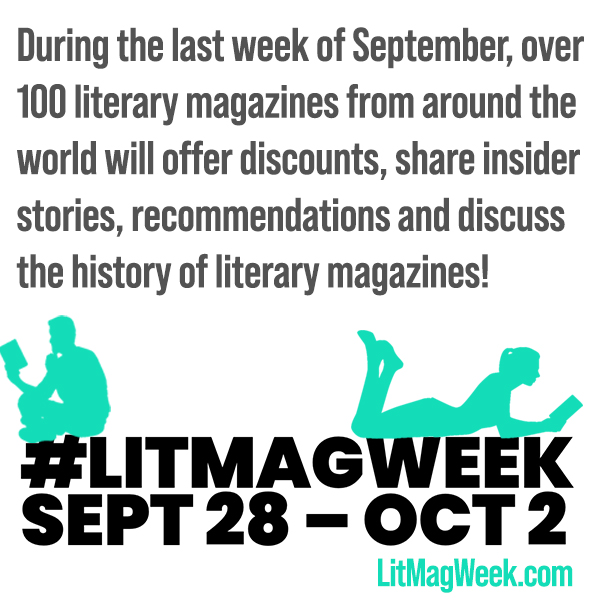
It's Lit Mag Week! We hope that you'll visit participating journals' sites, read the work they publish, show them some love—and maybe take advantage of some of the sweet deals they offer.
In a day or two, you'll see the price of our latest annual print compilation drop from $16.95 to $12.95. Nice discount, right?
Comments:
9.5.2026
Baltimore Book Festival 2026
by Barbara Westwood Diehl
Attention, Locals!
We'll have a table at the Baltimore Book Festival, September 19-20, with copies of our annual print compilations, games to play, and other fun stuff. And we love to chat with writers and readers. If you're there, be sure to drop by and say hello!
We'll also have a panel of readers, with some Q&A time, at the Peabody Heights Stage at the festival, September 19, 11:00 a.m. Thanks to Charm City Books.

Comments:
8.27.2026
Special Maryland Writers Section
by Barbara Westwood Diehl
We haven't forgotten our local roots!
We are adding a special Maryland Writers section to our fall 2026 issue. You must be a current Maryland resident to be considered for this special section.

The Maryland Writers section will be in addition to our regular, still-open categories—and you can live anywhere in the world for those. We love to hear voices from everywhere!
If you're a Maryland writer who already submitted to one of the other categories when we opened on August 1, feel free to withdraw your submission and submit it there, if you'd like.
Submit three poems, one short story (flash to 5,000 words max), or one creative nonfiction piece (flash to 5,000 words max). Not through the regular Submittable category for that genre. Submit through the Maryland Writers category, regardless of genre.
We look forward to reading your work.
Comments:
8.20.2026
Baltimore Review 2026 - Annual Print Compilation
by Barbara Westwood Diehl
Baltimore Review 2026, the print compilation of all work published in our summer and fall 2025 and winter and spring 2026 online issues, is now available for purchase.
Within the next few days, we will start sending copies to the 68 writers whose work is included in the book.
Great to read poems, short stories, and creative nonfiction online, right? Great to have all that work in a book you can hold in your hands, right? It's nice to have options.

Comments:
8.6.2026
Save the Date: Baltimore Writers’ Conference
by Barbara Westwood Diehl
Put this one on your calendars:
Baltimore Writers' Conference - November 14, 2026 - Towson University
Always an excellent conference. Reasonably priced.
And we'll have a table there, so you should stop by and say hello.
https://www.towson.edu/cla/departments/english/baltimore-writers-conference/
Comments:
7.29.2026
Free Generative Writing Session on August 1 at 1:00 p.m. Eastern Time
by Barbara Westwood Diehl
We're having another generative writing session this Saturday, August 1 at 1:00 p.m. Eastern Time on Zoom.
Examples from past issues of the journal, writing prompts, and timed responses.
Want to generate some raw material to polish later?
Just send an email to editor@baltimorereview.org to get the Zoom link.
Can't participate this time but want to be notified of future free sessions? Email us to get on the list
Comments:
7.27.2026
Wigleaf Top 50
by Barbara Westwood Diehl
Congratulations to the following Baltimore Review contributors for having their flash fiction selected for the Wigleaf Top 50 and Wigleaf Top 50 Longlist:
Wigleaf Top 50
Andrea Figueroa-Irizarry, "Lapagería"
Wigleaf Top 50 2026 Longlist
Dana Brewer Harris, "Bed Work"
Joanne Merriam, "Easy Bake"
Per Olvmyr, "Carefully Dreamed Shakshuka in Sachsenhausen"
Comments:
7.18.2026
Summer 2026 Issue Published July 18, 2026
by Barbara Westwood Diehl
We hope that you enjoy the poems, short stories, and creative nonfiction by the following writers in our summer 2026 issue, published on July 18, 2026.
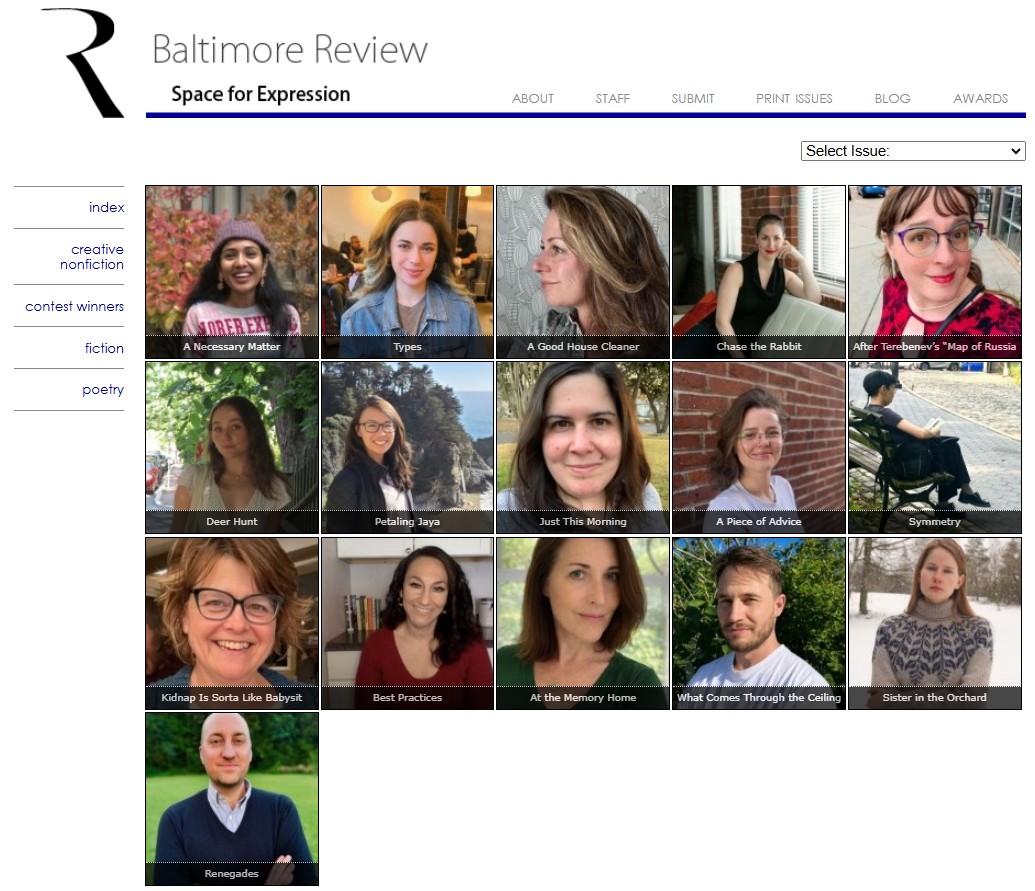
Katie Bannon
Deya Bhattacharya
Morrigan Byalin
Lynn Li Che
Matthew Di Ciano
Eileen Dolbeare
Rozalija Grace
Chris Guppy
Nahal Suzanne Jamir
Roey Leonardi
Christina Misite
Isabelle Ness
Triin Paja
Karen Saunders
Kanako Shimizu
Dean Marshall Tuck
Congratulations to our contest winners! And special thanks to our final judge, Jehanne Dubrow.
Lyn Li Che, Prose Poem
Morrigan Byalin, Flash Fiction
Chris Guppy, Flash Creative Nonfiction
Thanks to everyone who made this issue possible.
And thank you for being a Baltimore Review reader!
We open our Submittable doors again on August 1.
Comments:
7.13.2026
Dean Marshall Tuck
by
Comments:
7.13.2026
Kanako Shimizu
by
Comments:
7.13.2026
Karen Saunders
by
Comments:
7.13.2026
Triin Paja
by
Comments:
7.13.2026
Isabelle Ness
by
Comments:
7.13.2026
Christina Misite
by
Comments:
7.13.2026
Roey Leonardi
by
Comments:
7.13.2026
Nahal Suzanne Jamir
by
Comments:
7.13.2026
Chris Guppy
by
Comments:
7.13.2026
Rozalija Grace
by
Comments:
7.13.2026
Eileen Dolbeare
by
Comments:
7.13.2026
Matthew Di Ciano
by
Comments:
7.13.2026
Lyn Li Che
by
Comments:
7.13.2026
Morrigan Byalin
by
Comments:
7.13.2026
Deya Bhattacharya
by
Comments:
7.13.2026
Katie Bannon
by
Comments:
6.24.2026
Interview: Sarah Timmke at Bound bookstore in York, Pennsylvania
by June Locco
A bookshop is an almost magical place where stories and ideas exist. Like any book lover, my day is made better by just the opportunity to share the space for even a short time.
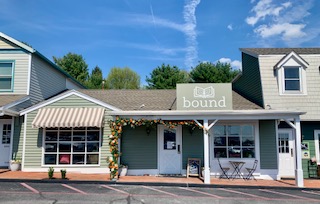
A few months ago, I was at a little coffee shop that I frequent in York, Pennsylvania, and spotted a business that had moved into the same shopping center. A sage green sign with leaves sprouting from the open pages of a book told me this could only be one thing—a bookshop. I was thrilled to see an independent store opening, rather than closing. Sarah Timmke and Chuck Blair had recently moved Bound from York City to the Olde Tollgate Village on Queen Street, and I had the opportunity to chat with Sarah about the shop.
As I typed up this post after the interview, I thought of the places where I’d add a note that Sarah laughed, or I laughed, but I realized that those notes would be everywhere. We laughed throughout most of the chat, and as I played back the recording, I heard the sound of others talking and laughing in the background, because Sarah has created a space for community, and that particular day the cozy sitting area was occupied by a group of knitters who regularly meet at the store. We need spaces like this where people can just be. And at just about an hour north of Baltimore, it’s worth a visit, and you’re Bound to find a book you love. See what I did there?
⸙
Thank you for taking the time to talk with me about your beautiful store. I recently read Libby Page’s This Book Made Me Think of You, and people are always telling Alfie, the bookshop owner, that he has the best job in the world—reading all day. Not realizing what the job entails, they’re surprised by all of the heavy lifting and dusting involved. What are your thoughts?
I could not have found a truer statement! People do say that. I’ve had customers ask if I’ve read every one of the books that we stock. We have 4,000 books! But I’m unboxing, I’m shelving, I’m the event planner, I’m the social media manager, I’m the PR person, I tag everything, stock everything, receive all the books.
Oh, my gosh. I’m overwhelmed just hearing this! I have to admit my dream of working in a bookshop didn’t include all of that!
It’s a lot more. My husband does the ordering—we do that together. I answer emails, phone calls, and text messages. Facebook and Instagram messages. I do the decorating, the cleaning, and mopping the floors. I can probably count on one hand the number of times I’ve actually read in the store.
Did you expect it to be like that?
I expected a little bit more downtime. I thought that I’d have time to do a little artwork, and some creative stuff in the downtime, but that doesn’t happen. I think the events and the social media are what take the most time. But yes, that’s such an accurate statement that people do think we have more time to read.
I guess with social media and BookTok and such, there’s a lot more of that kind of work than, say, twenty years ago?
Yes, which all helps sales. You don’t have to pay for ads in the paper, or radio slots, or the traditional forms of PR. It is all free, but it’s constant. You have to stay on it, and there’s the expectation to post regularly, and to constantly think of new content. My husband works on bookstore stuff in the evenings after work. It’s a lot, and we just have to forgive ourselves and tell ourselves we’ll get there.
What is something that people would be surprised to learn about running a bookshop, besides that you don’t get to read all day?
I think I’d say that people would be surprised to learn that it’s more of a job for an extrovert than you would think. A lot of people think when you own a bookstore, you’re an introvert, and I am, but as a business owner, you’re extroverting a lot. And the expectation is that it’s a quiet little bookstore job, but you’re chatting all day.
So, how did you choose the name of the store, Bound. I mean, obviously books are bound, but what made you decide on the name?
It’s funny. We went back and forth. We were trying to find something that was “this and this,” or somehow combining our names, and that kind of felt like the trendy thing. I don’t know how it hit me, but I was driving for my job that I had when we were planning to open a shop. I was doing preschool vision screenings at the time, so I’d go to different preschools, and I was driving and thinking about a name, and for some reason it just hit me. And I asked myself, why are we trying to do two words? Let’s just do one, and what about Bound? Then I thought, books are bound, but we also wanted it to be a community space, where people can come together, and be bound together, and with the plants, it just felt very grounded, and kind of fit everything together in one word.
It really is perfect.
Yes, except that a lot of people think we actually bind books. We get a lot of calls and emails where people say, “I have an old book and I’m looking for a book binder.” And I have to tell them that as much as our name suggests it, we don’t really do that at all.
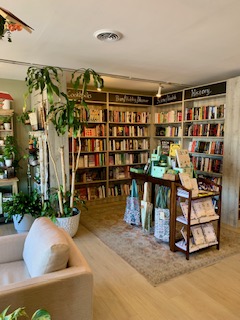
Okay, I have read and loved so many books about bookshops, and in many of them, the shop is almost a character in the book, and in most it’s clear that the bookshop itself has a personality. What is your bookstore’s personality?
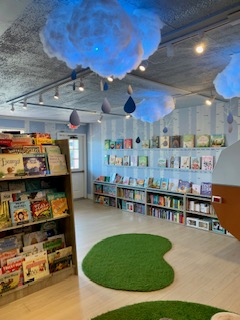
I think the plants play a lot into it. We have just a natural, clean aesthetic. A lot of people comment on the vibe when they come in, and I love the vibe here. I don’t know exactly, in words, what the vibe is. It’s a little mid-century, because we both like that style. Our house is nothing like it, so I think we wanted to kind of translate that here. It’s kind of like a modern, clean, grounded, soothing vibe? It’s a lot of things.
I agree. And it’s unexpected. You don’t expect to step in from a parking lot in a shopping center to find this space. It’s light, and the windows have those grids that aren’t just large plates of glass. It’s more like a house than a retail space. Almost greenhouse-y.
Yes, and we decorate with the plants, so they’re part of the space. I like that. I could go with greenhouse vibe. And it’s true, every bookstore has a vibe. I see that when I look at new release day on Tuesdays, and look at other bookstores that I follow, and see what they’ve stocked. We all get different books. There are some overlaps, but you kind of match the books to your store and the personality.
How do you decide what to order?
With a lot of time! My husband was just listening to a podcast and said he was shocked to hear how many books come out every year. Self-published as well, all books with an ISBN number. It’s three million a year! And we calculated we are probably looking at maybe one percent of those a year. You go through your distributor and see what the popular ones are. They’re arranged kind of by demand. We follow certain authors we like, and such, but it’s a lot of reading descriptions of books. And we’ll look at the covers, and sometimes I just see one that I can tell by the cover. That plays a factor in whether people will even pick it up. There’s no perfect formula, and we don’t always get it right. Or you pick one that you think won’t be popular, and order only three of them and sell out instantly. It’s a science, but we haven’t mastered it.
And a lot of luck?
Yes. And you look at The New York Times and the Booker list. Reese Witherspoon has a book club. Jenna Bush has a book club. Then there’s Good Morning America, and Oprah, and you have to make sure you order all of those because people come looking for them.
That “don’t judge a book by its cover” thing? We do it anyway.
Exactly. Particularly if it’s an unknown author. The cover plays a factor. Sometimes a book is really amazing, and I have to tell people, “Don’t pay attention to the cover, it’s a really great book.” But if a bookseller isn’t pushing that, you may not pick up the book.
What trends in reading habits are you seeing?
It’s not my genre, but romantasy has been huge. And books with sprayed edges. They’re beautiful, and sometimes people will see them, and even if they have already read the book, they’ll see the edges and want that version.
With the sprayed edges they fit the trend of putting books backward on the shelves, which I personally can’t imagine, yet I see social media debates about that. And books as décor.
That’s another thing I would say I’m seeing with trends. I think it’s actually becoming cool to read. I think that BookTok has helped with that. On BookTok you talk about everything you read, and it’s almost like a competition of how much you can read, and what books you’ve read, and I don’t remember that ever being the situation in the past.
Thinking back to when I was a teenager, it was the opposite of cool if you read a lot.
Right. Exactly. I was a total nerd. And that’s a good trend. I’m glad we’re moving in that direction.
Okay, I promise I’m almost finished. Do you have a favorite memory or unexpected moment as a bookseller that you want to share?
Hmm. There are milestones you hit. One year in the store, or your first day open. Those are big. I think it’s the smaller quieter moments, though, the things customers say. I do remember one customer telling me that he always feels better leaving than when he came in here. And that really just made me feel like I was doing something, for good. Because you kind of wonder, I have a retail store, but what does that mean? What am I offering to the world? Not that I need to offer something to the world, but you want a life that has a purpose. And you’re like, I’m selling books, what is the purpose there? I think at that moment I realized I was offering more than just that to people. I was offering a space, a safe space, and a place where people can feel comfortable, and themselves, and seen. I think that was important to me. It’s those little things. Comments that kids make are hilarious or really sweet. A mix of the big milestones and the little things. Or when people come in and you see the look on their face, and they say, “Oh, I really like it in here.”
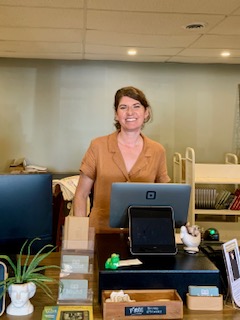
So, last question, I promise. I saw your sign advertising Independent Bookstore Day. What do you hope the future of independent bookstores will be? No pressure, of course.
Truly? I would like all of the independent bookstores, bookstores in general, because I love Barnes and Noble and have wonderful memories of the big two-story store in Towson, to just bring the market back to individual stores. People come in and say, “I can get this cheaper on Amazon,” and yes, they can, because Amazon isn’t making any money from the books. But bringing the market back to the individual stores would be really nice.
⸙
Yes, it would be really nice. There is something about bookstores that we need, something that we can’t find in the same app or website where we buy paper towels, or vitamins, or that weird little brush that cleans the spout on our water bottles. Call it the vibe, or the personality. Books are therapy and a place to find what we didn’t know we needed. I am holding out hope for a long and bright future for bookstores and booksellers, and in the meantime maybe I’ll see you among the stacks.
You can visit Bound online at Boundbookshop.com or in person at 2555 South Queen Street in York, Pennsylvania.
Comments:
5.5.2026
Break Out the Shorts: A Free Generative Writing Session
by Barbara Westwood Diehl

Need to channel some of that spring fever energy? Join us for a free generative writing session on May 17, 2:00 p.m. Eastern Time. We’ll talk about the short-form categories for our contest—prose poem, flash fiction, flash creative nonfiction—and give examples and writing prompts. We love shorts!
All you have to do is email editor@baltimorereview.org and ask us to send you the Zoom link.
Comments:
4.25.2026
Spring 2026 Issue Published April 25, 2026
by Barbara Westwood Diehl
We hope that you enjoy the poems, short stories, and creative nonfiction by the following writers in our spring 2026 issue, published on April 25, 2026.

Caroline Bock
Gordon Brown
Zach Eaton
Amy Halloran
Jane Hilberry
Yuan Jiang
Emily Kingery
Dana Holley Maloney
Annie Marhefka
Meg McManama
Betty Ruddy
Julien Shen
Emily Van Kley
Patrick Whitfill
Amie Whittemore
A huge thanks to everyone who made this issue possible.
And thank you for being a Baltimore Review reader!
Writers: Our current submission period ends May 31. No submission fee, ever, for non-contest submissions—but we’ll send you a big doc with 68 writing prompts and a bunch of tips if you donate $5.
Our summer contest categories are prose poem, flash fiction, and flash creative nonfiction. See our submission guidelines for details. Contest deadline is May 31. All entries considered for publication.
Final judge: Jehanne Debrow
Comments:
4.21.2026
Amie Whittemore
by
Comments:
4.21.2026
Patrick Whitfill
by
Comments:
4.21.2026
Emily Van Kley
by
Comments:
4.21.2026
Julian Shen
by
Comments:
4.21.2026
Betty Ruddy
by
Comments:
4.21.2026
Meg McManama
by
Comments:
4.21.2026
Annie Marhefka
by
Comments:
4.21.2026
Dana Holley Maloney
by
Comments:
4.21.2026
Emily Kingery
by
Comments:
4.21.2026
Yuan Jiang
by
Comments:
4.21.2026
Jane Hilberry
by
Comments:
4.21.2026
Amy Halloran
by
Comments:
4.21.2026
Zach Eaton
by
Comments:
4.21.2026
Gordon Brown
by
Comments:
4.21.2026
Caroline Bock
by
Comments:
4.1.2026
Baltimore Review - April Updates
by Barbara Westwood Diehl
Congratulations to all the Best of the Net winners and to Baltimore Review contributors Hannah Keziah Agustin (poetry) and Anne Rudig (creative nonfiction) on being honored as finalists!
_________________
We are currently making selections for our spring issue, which we plan to publish later this month.
_________________
Our summer contest categories are now open through May 31: prose poems, flash fiction, flash creative nonfiction. We love shorts. See our submission guidelines for details.
Final judge: Jehanne Dubrow
_________________
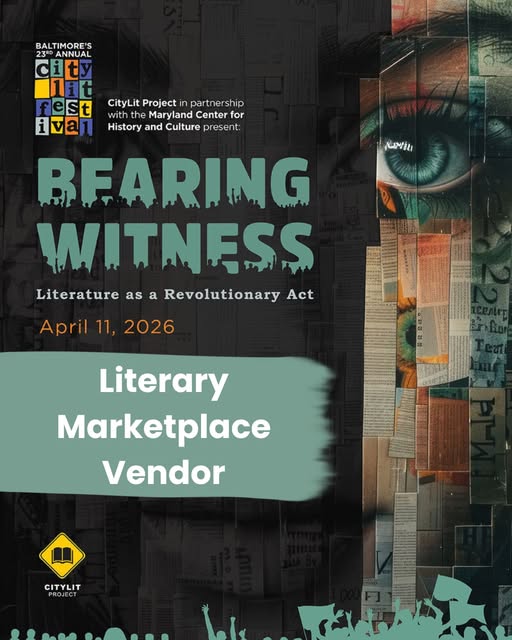
If you’re attending the CityLit Festival in Baltimore on April 11, stop by our table and say hello. We love to chat!
Comments:
2.27.2026
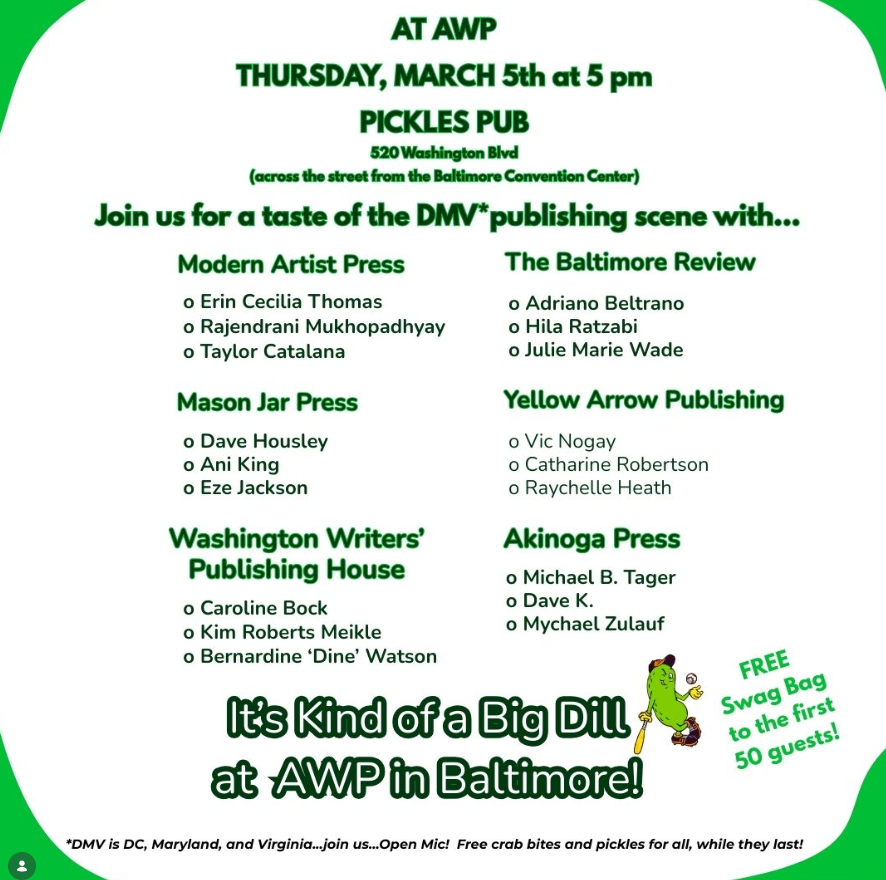
Baltimore Review at AWP - March 5-7, 2026
by Barbara Westwood Diehl
Attending AWP in Baltimore? Drop by our table and say hello! Our Bookfair location: T623.
Matt Poindexter will sign copies of his poetry collection, Fatherland, published by Unicorn Press. March 6, 10:30-11:00 a.m. A poem by Matt Poindexter appeared in Baltimore Review's fall 2025 issue.
Veronica Kornberg will sign copies of her poetry collection, Strange Gift, published by Wandering Aengus Press. March 7, 10:30-11:00 a.m. A poem by Veronica Kornberg appeared in Baltimore Review's fall 2025 issue.
Among so, so many things to do: Participate in the scavenger hunt!
Off-site events:

Comments:
1.31.2026
Free Valentine’s Day Generative Writing Session
by Barbara Westwood Diehl
We'd like to show a little Baltimore Review love by offering a free generative writing session on Valentine's Day. Noon, so it won't interfere with any evening plans. We promise it won't be cheesy. Interested? Email editor@baltimorereview.org to receive an invitation and Zoom link.
Comments:
1.20.2026
Winter 2026 Issue Published January 20, 2026
by Barbara Westwood Diehl
We hope that you enjoy the poems, short stories, and creative nonfiction by the following writers in our winter 2026 issue, published on January 20, 2026.
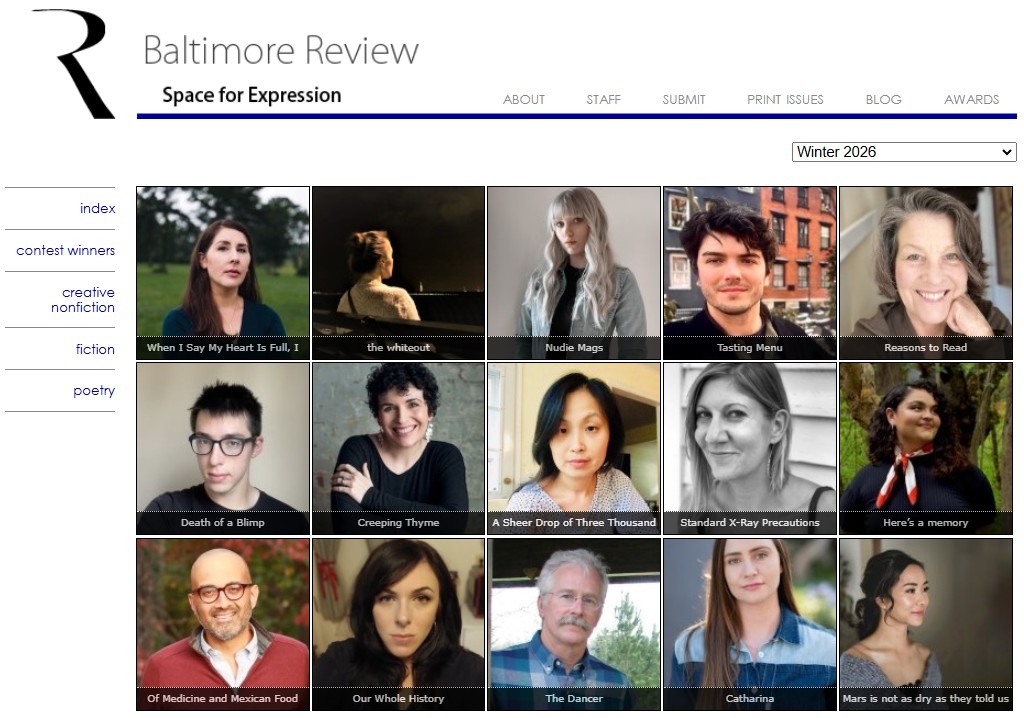
Cole Alexander
Rebecca Bernard
Emma Bolden
Nadia Born
Grayson Burke
Jehanne Dubrow
Ashley Hutson
L. A. Johnson
Lexi Pelle
Akshay Pendyal
Bianca Alyssa Pérez
Hayden Saunier
Patrick Vala-Haynes
Mizuki Yamamoto
Ann Yuan
Congratulations to the contest winners! And special thanks to our final judge, Mandy Moe Pwint Tu.
Jehanne Dubrow, Prose Poem
Nadia Born, Flash Fiction
Rebecca Bernard, Flash Creative Nonfiction
A huge thanks to everyone who made this issue possible.
And thank you for being a Baltimore Review reader!
Writers: Our next submission period is February 1 through May 31. No submission fee, ever, for non-contest submissions—but we’ll send you a big doc with 68 writing prompts and a bunch of tips if you donate $5.
Our next contest will be announced soon.
Comments:
1.13.2026
Ann Yuan
by
Comments:
1.13.2026
Mizuki Yamamoto
by
Comments:
1.13.2026
Patrick Vala-Haynes
by
Comments:
1.13.2026
Hayden Saunier
by
Comments:
1.13.2026
Bianca Alyssa Pérez
by
Comments:
1.13.2026
Akshay Pendyal
by
Comments:
1.13.2026
Lexi Pelle
by
Comments:
1.13.2026
L. A. Johnson
by
Comments:
1.13.2026
Ashley Hutson
by
Comments:
1.13.2026
Jehanne Dubrow
by
Comments:
1.13.2026
Grayson Burke
by
Comments:
1.13.2026
Nadia Born
by
Comments:
1.13.2026
Emma Bolden
by
Comments:
1.13.2026
Rebecca Bernard
by
Comments:
1.13.2026
Cole Alexander
by
Comments:
12.14.2025
Baltimore Review 2025 Prize Nominations
by Barbara Westwood Diehl
Baltimore Review 2025 Nominations:
PEN/Robert J. Dau Short Story Prize for best debut fiction published in a literary magazine
“The Baby,” Claire Wyatt
Best of the Net
Work published between July 1, 2024 and June 30, 2025
“The Nugget,” Anne Rudig
“beta waves,” Marika Guthrie
“Passions,” Sarah Sugiyama Issever
“#JustTheTwoOfUs,” Sage Tyrtle
“Fishing Trip,” Kelly Terwilliger
“September,” Leanne Shirtliffe
“Premonition,” Lindsay M. D'Andrea
“A Story,” Caroline Barnes
“blueberries,” Fran Qi
“Wisconsin, Summer,” Hannah Keziah Agustin
Best Small Fictions
Work under 1,000 words published in 2025
“A Bird,” David Hansen
“Crux,” Kayla Rutledge Page
“Yo Mama,” L. Soviero
“Carefully Dreamed Shakshuka in Sachsenhausen,” Per Olvmyr
“Easy Bake,” Joanne Merriam
Pushcart Prize
Work published in 2025
“Three Horses in a Field at Dusk,”
“Apocalypso,” Ron MacLean
“Root Lady,” Fay Sachpatzidis
“Note from the (sic)Bed,” Veronica Kornberg
“Snowfall,” Stefan Balan
“Suspended Belief,” Megan Nichols
Best Microfiction
Work under 400 words published in 2025
“In an uncannily incandescent time when night skies still twinkled,” Mikki Aronoff
“Dysgeusia,” Christopher Notarnicola
“Spite the Face,” Brett Biebel
“Bull,” Rebecca Klassen
“On The New Yankee Workshop, Norm Abrams Builds a Garden Swing on Which to While Away an Evening,” Abbie Kiefer
The Best Short Stories of the Year: The O’Henry Prize
In April 2025, we sent the following the following nominations for the O’Henry Prize
“Conduit,” Andrea
“Three Horses in a Field at Dusk,” Erik Harper Klass
“Apocalypso,” Ron MacLean
“The Two Kinds of Stories We Told,” Elizabeth Rosen
“#JustTheTwoOfUs,” Sage Tyrtle
Copies of our annual print compilation are sent to the Best American series editors each year.
We also send copies of work published online after our print compilation is published.
And sometimes, nominations and even awards come as a pleasant surprise. We include a list of awards here.
Wishing all the best for the wonderful writers published in the past year’s issues!
Comments:
11.25.2025
On the Poems in Causa Sui: An Interview with Dorian Elizabeth Knapp
by Jane Satterfield
You’ve published two previous collections, Requiem with an Amulet in Its Beak (WWPH, 2019; winner of the Jean Feldman Poetry Prize) and The Spite House (C&R Press, 2011, winner of the De Novo Poetry Prize), both of which explore connections between the private and the public, the personal and the historical. How was this collection different, in terms of subject matter or process?
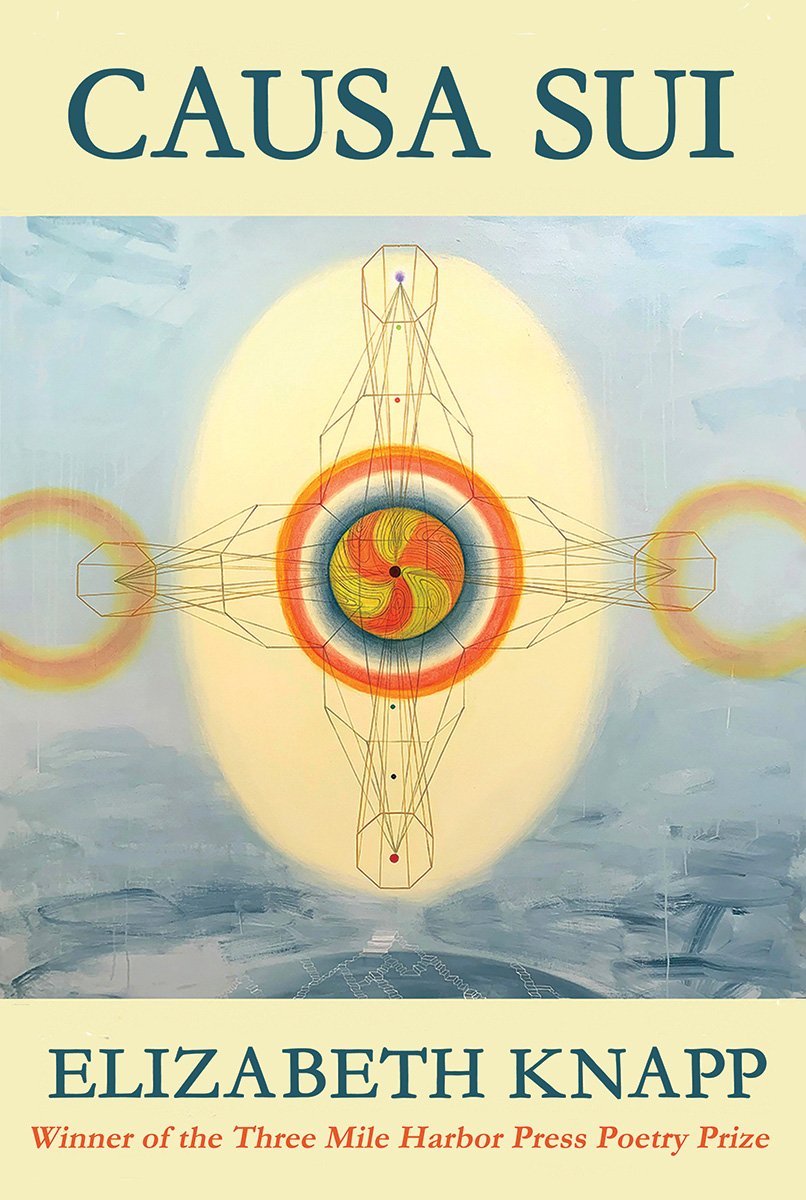
As I was writing the poems in Causa Sui, I worried that they would be too much like the poems in Requiem, that I was actually just writing the same book all over again. I think part of that was related to our collective déjà-vu—feeling like we were back in 2016, now only worse. Poets are obsessive creatures—all artists are to some extent—so of course certain subjects will recur throughout a poet’s work. For me, those subjects are what I see reflected in American life. If this new book is different, it’s in the way it confronts those subjects even more directly.
I noticed two forms you’re fond of: ars poetica and persona poems. Could you talk about why these seem especially compelling and how they open space for reinvention?
I think all poems are ars poeticas and persona poems, in the same way that all poems are elegies. Of course, some of my poems are explicitly in those modes, but I think my work as a whole is concerned with the idea of making—making poems, in particular—and with identity. Specifically, the poems in CausaSui are concerned with the idea of making art in a time of crisis. So the actors within that crisis emerge as the poems’ primary voices. For example, the speaker of the “‘We the People’: Found Poems from Project 2025” is the collective voice of the oppressor, although by the end, the speaker’s voice merges into the collective voice of the oppressed.
Sequences are incredibly challenging, and one that anchors Causa Sui is “‘We the People’: Found Poem from Project 2025” which is doubly difficult since it’s comprised of found poems. I know some writers work strictly within the bounds of a chosen text, while others are more flexible, generative, associative, and willing to let the found language seed new words and phrases. Could you talk about the process of selection and arrangement that guided you as you worked with found material?
I started “‘We the People’: Found Poems from Project 2025” as an erasure using Project 2025 as the source text but quickly discovered erasing 900+ pages of text to be overwhelming, so I wrote the series as found poems instead. Sometimes I would pick up words and phrases from a single page of the text, and sometimes I would start with a single word or phrase from the text and then build the poem around it. Once I finished a poem, I would check to make sure the words I used were also included in the text. I had a few rules: each poem had to be exactly nine brief lines (three tercets) and could not use punctuation or repeat words (except for articles, prepositions, and variations of “America”).
I really enjoyed “For My Student Who Claims That Where the Wild Things Are Is Not a Queer Text.” What advice do you have for students interested in exploring or teaching writing?
If you want to be a writer, read. Read everything you can get your hands on, especially in your genre, but also outside your genre. Then practice. Keep practicing. Keep reading. Keep writing. Think of it like athletic training or muscle memory. You strengthen that muscle memory every time you read and then practice your skills by writing.
Your poem “Change Management” (a wry commentary on filling out an annual review) speaks to the corporatization of education and the arts, as do several poems that you describe as “written in the manner of ChatGPT.” These felt a bit Audenesque to me, ironic, but also filled with the warning notes of lament. I’m curious about your process in writing these poems and if you find them restorative in any way?
The ChatGPT poems are erasures, so they’re playing on the concept of generative AI in poetry. I wouldn’t say I found writing those poems “restorative,” but I did find it satisfying. While ChatGPT and other LLMs are becoming increasingly—and alarmingly—adept at imitating a human voice, they still can’t write a good poem. ChatGPT will always use rhyme and meter, unless prohibited to in the prompt, but its free verse is no better. Whether formal or free verse, AI-generated poetry is generally painfully overwrought and clichéd, or else totally bizarre—in a hallucinatory sort of way. This is why I tell students that their own poems will invariably be better than anything AI can produce.
I know you’ve spent time abroad and that so many of your poems confront day-to-day political realities of contemporary life. Are there writers or artists who have inspired you or serve as models for your own aesthetic goals?
There are too many! The two contemporary poets whose work had the greatest influence on the poems in Causa Sui are Terrance Hayes and Nicole Sealey. Specifically, Hayes’s American Sonnets for My Past and Future Assassin and Sealey’s The Ferguson Report: An Erasure are two books I was actively reading and thinking about while writing my own.
Each of your books—and Causa Sui is no exception—pays witness to domestic life: the gritty realities of motherhood, the joys and challenges of married life. Those anniversary poems are so lyrically rich and vivid. Do you have any tips or tricks that guide you when you’re writing up close and personal about loved ones? Is this any easier since your spouse is a writer as well?
Love poems and poems about motherhood are by far the hardest for me to write. I find it so difficult to approach those subjects without lapsing into sentimentality and cliché. I want those poems to have a certain amount of humor and tenderness, but I always find myself treading carefully around them. Now every year, I get anxious in the weeks before my anniversary, because I know I have an anniversary poem to write. And if I don’t write it, I won’t have a gift. The fact that my spouse is also a writer only makes it worse—he knows a bad poem when he reads one!
Comments:
11.23.2025
Quiet and Loud, Present and Absent: An Interview with Jeannie Vanasco
by Jill Sisson Quinn
The silent treatment. We’ve all gotten it–or given it–at one time or another. But what if you’re a writer, and your mother, not for the first time in your life, stops talking to you for an extended period? And this time, it’s after you invite her to move into your home and she willingly agrees? Well, then you get Jeannie Vanasco’s third book, A Silent Treatment. Even in the absence of words, Vanasco finds a complex story.
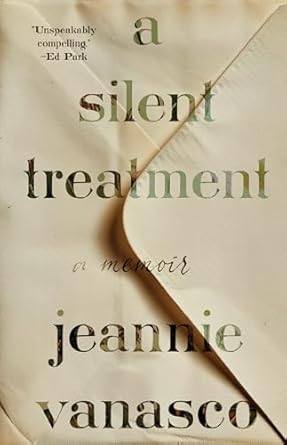
In this metacognitive memoir cut from the same cloth as her earlier books, The Glass Eye and Things We Didn’t Talk About When I Was a Girl, Vanasco explores the psychology behind giving the silent treatment, the psyche driving her mother’s silent treatment, and her own persona as daughter.
I asked Vanasco, associate professor of English at Towson University in Maryland, a few questions about writing and relationships.
What is your writing practice? Do you write every day?
I write most days, but I avoid strict schedules or routines. I use notebooks, notecards, scraps of paper, book margins, my phone’s Notes and Voice Memo apps, Google docs, Word, email drafts, binders. But sometimes I treat a binder like it’s a closet before company comes over. I shove everything inside and pray nobody opens it. A few months ago, I found—in a closet, no surprise—a spiral-bound notebook labeled A Silent Treatment. I’d never transcribed it. Finding it felt like finding cash in an old pair of jeans. I’ll use it for something else.
Can you talk a little bit about structure? Your book consists of a mix of full paragraphs, word association, near-poems, lists, transcripts of thought. How do you structure a chapter? How do you go about structuring a book?
I want structure to reflect experience, but only after writing a full draft do I start to see the structure—specifically how structure and conflict connect. I mean, it’s all connected: character, plot, setting, all of it. The silent treatment itself is conflict, but for A Silent Treatment, I needed to vary the forms of conflict. The conflict couldn’t just be: my mom isn’t talking to me, my mom isn’t talking to me, my mom still isn’t talking to me. So I thought about other forms of conflict, especially with other characters, like when Chris said, “Why don’t you just go down there and talk to her?” And I came up with all these reasons why I couldn’t. That scene appears in chapter two, but I didn’t write it until very late in the process. Our conversation actually happened. I didn’t make it up. I just hadn’t considered it relevant until after I had a full draft. This is partly why I feel uncomfortable writing a memoir: it’s selective. It has to be. But I’m not manufacturing conflict, or minimizing conflict, to fill a received structure. I’m trying to find meaning from my experiences, and from there I’m trying to build a structure.
Because the silent treatment itself seemed simultaneously quiet and loud, I wanted white space set against the franticness of associative leaps. But that risked complete disorder, so I used repetition to give the manuscript some coherence. For example, certain objects repeat: the wind chime, Chris’s boxers of the month, the newsletter that came with our fancy eggs. As for lists, I make those when life feels out of control. So I included them to show my anxiety. Finding the structure was hard. I almost gave up on the book many, many times. Whenever somebody tells me to outline or storyboard “to make things easier,” I think, But why would I want to make things easier?
Although your mother isn’t talking to you for a good part of this book, you’re in conversation with her in parentheticals throughout much of the text. At times, these parentheticals seem like things your mother has actually said; at other times, I wondered if they could be things you thought your mother would say, like her voice in your head. At one point, you even ask yourself this question: “Her dialogue goes in parentheses–when? When it’s intrusive? (Mom: You are such a disappointment.)” (p. 85). How did you come up with the parenthetical idea, which seems so perfect for the subject of the book? How did you decide what went in the parentheticals, and at what point did they get written into the manuscript? As you went along? Or later?
Here’s how I think it happened: I was staring into my refrigerator and remembered what my mom had said of her childhood refrigerator—that her mother had never cleaned it, and they had water bugs crawling out of it. I’m not sure when I added the parentheticals to the manuscript, but I think the refrigerator parenthetical was the first one I wrote. What I can say for sure: I’d written drafts that didn’t work, and they didn’t work because my mom’s character was missing. During her silences, she felt very present, but I couldn’t figure out how to represent that. The parentheticals seemed like an answer. Everything in them, she’d either said or written to me. And they were all sentences that interfered unexpectedly, like intrusive thoughts. During revision, I realized the parentheticals could help me move between past and present, or make a seemingly simple moment, such as grocery shopping, more complex. A lot of the parentheticals repeat throughout the book, but sometimes their tone changes because of context.
Your memoirs seem to be not only metacognitive in your examination of your thinking about the events of the memoir, but also in your examination of the way you write about the events of the memoir. In other words, the book seems to be conscious of, or transparent about, its own rhetoric and how that rhetoric shapes the story. You talk about promises made in your book proposal in this book, you workshop the book in this book, and at one point, you say, “Even if a book’s form or style impersonates a journal, writing and journaling are very different” (p. 204). This seems almost like a confession to the reader. What’s it like to write in this way?
I love this question. No one has asked me what it’s like. Sharing how I think and feel—not strictly what I think and feel—that’s where the vulnerability is. Being vulnerable is hard. It’s scary. You risk embarrassment. Shame.
The “writing and journaling” passage makes me think of fluency bias, how if something looks easy, people assume it is easy. A lot of us spend a lot of time trying to make things look easy. I don’t want to pretend.
And the writing about the writing—I can’t imagine not including it. To me, that’s the plot. That’s me making meaning out of events. The reader knows they’re reading a memoir, so it seems normal to acknowledge it. For me, the meta-element also has to do with ethics. I want the reader to remember what a memoir really is: one person’s interpretation of an experience.
How did you decide to incorporate Google Home in A Silent Treatment? Building on that, have you played much with artificial intelligence in other ways in your writing, or in exercises with your students at Towson University? How do you feel about writing now that LLM’s have entered the landscape?
Feeling desperate one afternoon, I asked the Google Home Mini, “What do you do when your mother uses the silent treatment?” I don’t know what I expected. Until then, I’d used it strictly as a light dimmer. It quoted a psychologist whose books about social ostracism I’d read, and I thought: okay, so this is how I can transform some of my research into scene. I didn’t use the Google Home Mini to do research. I used its answers to transition into research. Also, its dumbest replies offered some levity. When it talked, though, the cats would meow and circle it and look at me, like, “What are you going to do?” Maybe they thought a lady was trapped inside. So it’s back to being a light dimmer.
As for LLMs, I hate them. Hate them. Everybody keeps saying, Well, AI is here now. We can’t avoid it. I’m like, oh my god, what are you talking about? Did nobody go to preschool? Where is the impulse control? I get very angry about this, and maybe, just maybe, I should consider a more nuanced view. But as a creative writer, I absolutely hate LLMs. Writing is noticing. If you’re using LLMs, you’re not noticing. Yet all the tech companies conflate them with writing. I was at the Apple Store earlier this year, buying a new laptop, and the guy selling it to me asked if I knew about its AI “writing” features. I said, “I don’t need to know.” But he excitedly described them and quoted Anne Lamott’s “Shitty First Drafts.” Apple’s AI would take my “shitty first draft,” he said, and clean it up. I almost said, I don’t think that’s what Lamott meant, and I almost quoted Thomas Mann to him—“A writer is someone for whom writing is more difficult than it is for other people”—but I just bought the thing and left.
Can you give us examples of or recommendations of other metacognitive memoirs? I can think of Didion’s The Year of Magical Thinking and Jamison’s The Empathy Exams. Do you have any recommendations for reading further in this sub-genre?
Those are great examples. I’ll add Michael Loughran’s Windower, Jazmina Barrera’s Linea Nigra (translated by Christina MacSweeney), Therese Marie Mailhot’s Heart Berries, Peter Handke’s A Sorrow Beyond Dreams, and—this is an older one—Xavier de Maistre’s Voyage Around My Room. I also think Aisha Sabatini Sloan does this beautifully in her essay collection Dreaming of Ramadi in Detroit.
How did you find Chris?! He seems like such a wonderful partner–supportive of your mental health needs, your writing, and in this book, your relationship with your mother. At the end of the book, you promise you’ll never write a memoir for him, and Chris says, “I’m okay with that.” Is this a foreshadowing? Do you think you’ll ever write a memoir about Chris?
Chris and I have been together for sixteen years now, and I feel very lucky to be with him. I would like to continue being with him, so I don’t think I’ll write a memoir about him. I recently brought it up, jokingly, and I think his exact words were, “Please, don’t.” My mom, meanwhile, was way more open to this. Had she asked me not to write the book, I wouldn’t have.
Finally, is your mom still living in the apartment across the street? And how is it going?
She’s still across the street, and life is so much better—for both of us. She still has Max and Brooklyn, and she recently adopted a bonded pair of kittens, Finian and Rainbow. They’re all happy, and Chris and I are happy over here with Catullus, Kiffawiffick, and Hildegard. She and I talk every day.
Comments:
11.17.2025
Look For Us at the ESWA Holiday Book Festival
by Barbara Westwood Diehl
A busy fall for us! We're reading submissions (5,700 received so far since August 1) and will soon be selecting work for our winter issue. The upcoming issue will include contest winners, too, so we'll have a group of finalists ready for the final judge, Mandy Moe Pwint Tu, within a couple weeks of the November 30 deadline.
We had a table at the Baltimore Writers' Conference at Towson University on November 15, and it was wonderful to chat with attendees and fellow publishers. Cheers to the conference organizers on another great event! I hope this long-running conference will continue for many years to come.
And a couple of us will be reading our own work and chatting with students at Notre Dame Preparatory School here in Baltimore in a couple of weeks. It's good to share our love of creative writing with young students when we have an opportunity.
Our next table: The Eastern Shore Writers Association Holiday Book Festival at Cult Classic Brewing on December 13. This one should be a blast. I'm planning on some fun table activities--along with having BR books for sale, of course. If you're in the Eastern Shore area, stop by and say hello.

Comments:
10.20.2025
Fall 2025 Issue Published October 19, 2025
by Barbara Westwood Diehl
We hope that you enjoy the poems, short stories, and creative nonfiction—along with a special micro section—by the following writers in our fall 2025 issue, published on October 19, 2025.
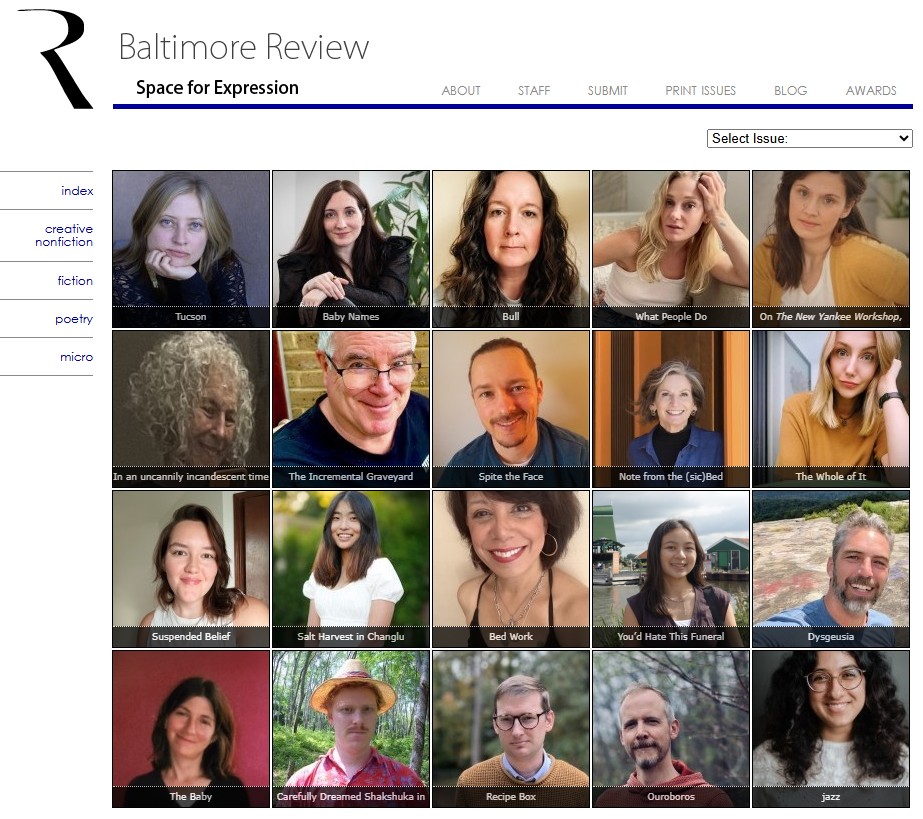
Mikki Aronoff
Allison Field Bell
Brett Biebel
Nina Boutsikaris
Mike Bove
Jiordan Castle
Ron Dionne
Dana Brewer Harris
Audra Huang
Abbie Kiefer
Rebecca Klassen
Veronica Kornberg
Helen Meneilly
Megan Nichols
Christopher Notarnicola
Per Olvmyr
Matt Poindexter
Z. Yasmin Waheed
Claire Wyatt
Allison Zhang
As a regular reader and writer of micro-length work myself, I especially enjoyed seeing what hundreds of writers created with this 400-word limit. In meetings with other BR editors, we noted how some had fantastical elements, and some were simple, direct, entirely realistic. Some told stories with complete narrative arcs; some were glimpses into a world or anecdotes; some were portraits. Some were abstract; some were filled with imagery. Some were perfectly comfortable being well under the 400-word limit. Some begged to be much longer works. Since these didn’t need to be shelved into a category (as submissions are for our contests), we sometimes talked about how we’d define them, how the language in this one made it a prose poem, or how that one sure sounded like creative nonfiction.
In the end, though, we read all of them as simply micros. Small boxes of compressed language and emotion like jack-in-the-box toys ready to spring a surprise on us. We always wanted to be surprised by something in the micro—a freshness in the subject or language or both. I’m so glad that we were able to include this special category. And, of course, we always welcome micro-length works in all our categories.
A huge thanks to everyone who made this issue possible.
And thank you for being a Baltimore Review reader!
Writers: Our Submittable doors, for contest and non-contest submissions, are open until November 30, 2025. See our submission guidelines for each of these categories. No submission fee, ever, for non-contest submissions—but we’ll send you a big doc with 65 writing prompts and a bunch of tips if you donate $5. Contest fee is a modest $8 (and we’ll send you the writing prompts doc if you ask for it—prompts are helpful sometimes, right?). The final judge for the contest is Mandy Moe Pwint Tu. We look forward to reading your work.
Comments:
10.14.2025
A Hero’s Journey, with Pockets: Claire McCardell, by Elizabeth Evitts Dickinson
by Seth Sawyers
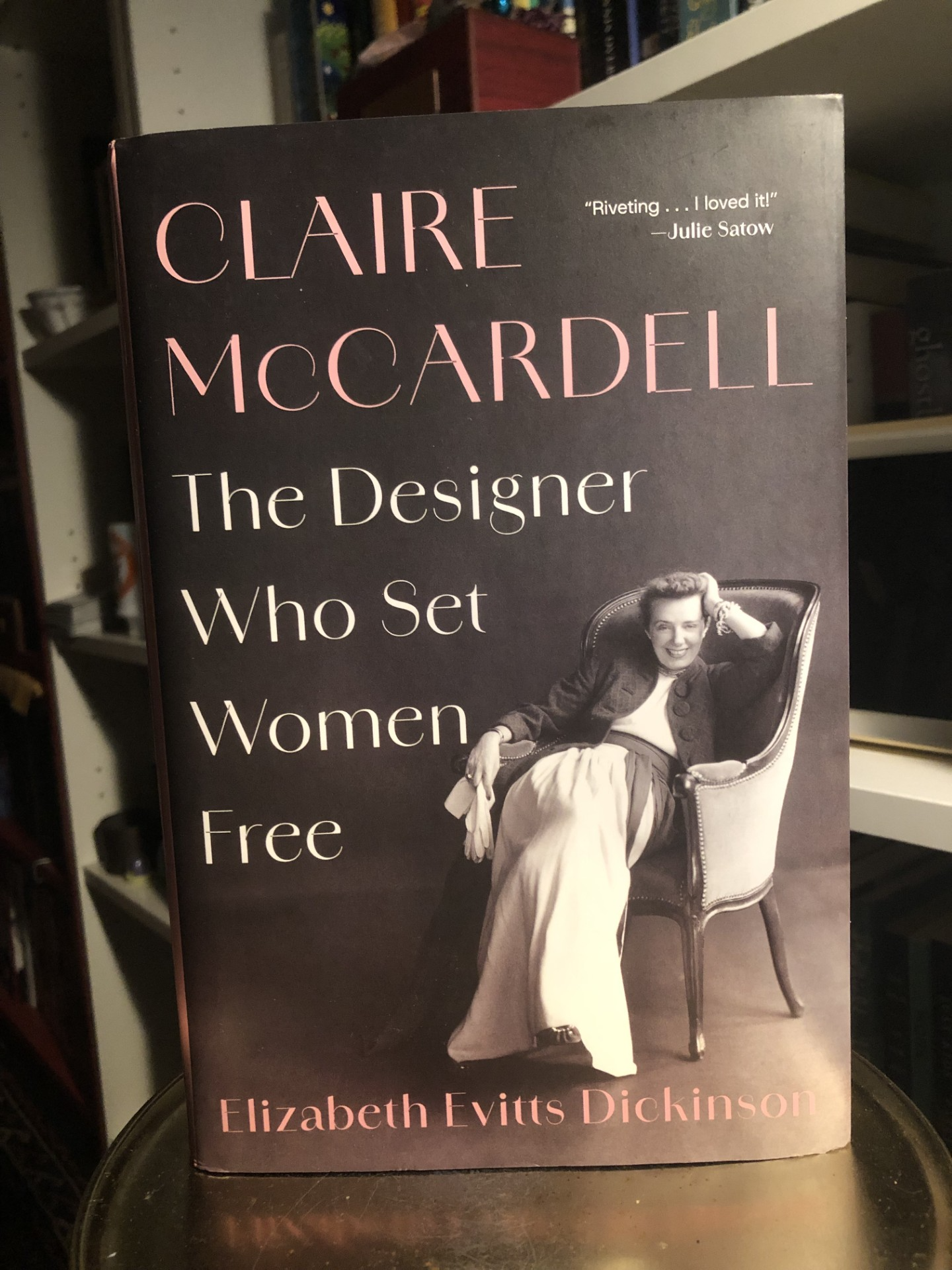
I picked up a biography about a woman I’d never heard of who practiced a form of art I don’t often think about, and I couldn’t put it down.
Such is the storytelling ability of Elizabeth Evitts Dickinson in her super-readable biography of midcentury fashion designer Claire McCardell. Though the book’s subtitle tells us McCardell becomes the “designer who sets women free,” Evitts Dickinson has structured her biography so that triumph never feels assured. The result is a book that compels.
We’re told a version of the hero’s journey story. In the early 1920s, McCardell, a talented but academically disinterested young woman from Frederick, leaves for New York. There, she encounters a thousand obstacles, gets knocked back, ultimately succeeds, only to be largely forgotten after her early death at the age of 52. It’s those obstacles—less-talented business partners, prejudice toward dresses containing pockets, Christian Dior, and, above all else, a business world hostile to successful women—met with McCardell’s talent and drive that make this the kind of satisfying story in which the hero conquers after having risen from little.
Beyond only recounting the stones thrown and the stones dodged, Evitts Dickinson writes with such seeming ease, such richness of 1920s Paris or wartime New York or McCardell’s New Jersey country house, that the pages fly by. It all goes down so easy, the feel of the linen, the chill of the transatlantic voyage, the warmth of the weekend stews she’d make, that you forget you’re reading a biography. It feels like you’re reading a story.
It’s a sewing machine of a biography. You’re the fabric, pulled along. It’s a book that leaves a mark. Even if you’re like me, who hasn’t thought much about fashion, you’ll not again look at something on a hanger without thinking about how it came to be or how it, as McCardell so often thought about, might make a body feel.
Comments:
10.13.2025
Allison Zhang
by
Comments:
10.13.2025
Claire Wyatt
by
Comments:
10.13.2025
Z. Yasmin Waheed
by
Comments:
10.13.2025
Matt Poindexter
by
Comments:
10.13.2025
Per Olvmyr
by
Comments:
10.13.2025
Christopher Notarnicola
by
Comments:
10.13.2025
Megan Nichols
by
Comments:
10.13.2025
Helen Nancy Meneilly
by
Comments:
10.13.2025
Veronica Kornberg
by
Comments:
10.13.2025
Rebecca Klassen
by
Comments:
10.13.2025
Abbie Kiefer
by
Comments:
10.13.2025
Andra Huang
by
Comments:
10.13.2025
Dana Brewer Harris
by
Comments:
10.13.2025
Ron Dionne
by
Comments:
10.13.2025
Jiordan Castle
by
Comments:
10.13.2025